생각할 시간이 많으면 나는 생각이 많아진다. 하지만 그 시간이 꼭 나쁜 것만은 아니라고 생각한다. 평소에 흩어져 있던 궁금증이나 잡다한 생각들을 차분히 정리할 수 있기 때문이다. 그렇게 머릿속 어수선하던 것들이 하나씩 줄 세워지고, 조금은 구조화되어 정리되는 순간을 은근히 즐긴다.
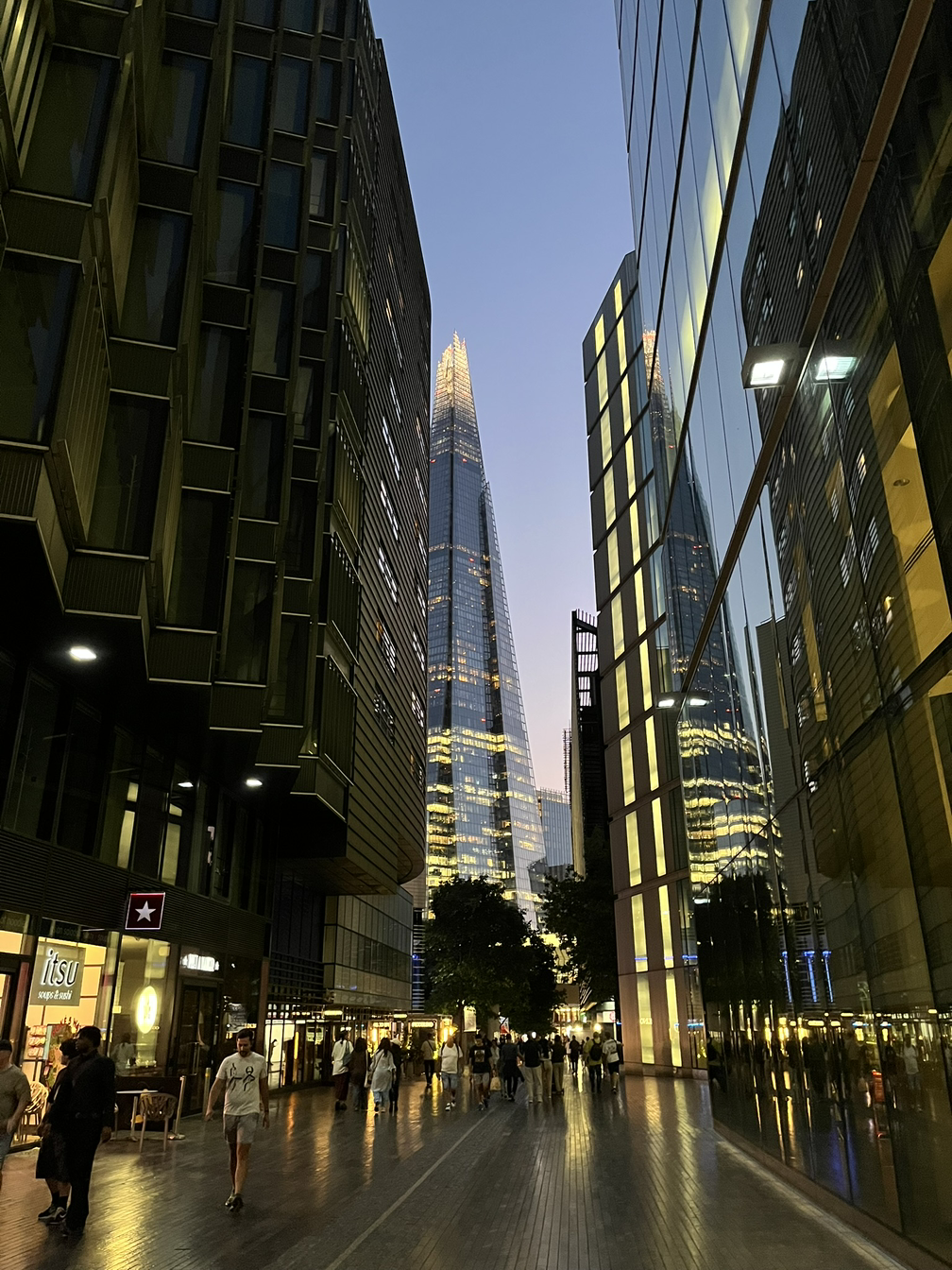
그런데 8월 런던에 도착한 이후로는 그런 여유가 거의 없었다. 시간도 부족했고, 시차 적응도 되지 않아서 체력도 쉽게 고갈됐다. 나는 원래 규칙적인 생활을 좋아하는 사람이다. 매일 비슷한 시간에 잠자리에 들고, 같은 시간에 일어나며, 일이든 공부든 상관없이 일정한 시간에는 늘 무언가를 한다. 이런 습관은 내 삶의 리듬이자 관성이었다. 하지만 런던에 온 뒤로는 그 리듬이 흔들렸다. 아직 시차 적응이 완전히 되지 않아, 밤 9시만 되면 눈이 무겁게 감기고 금세 피곤해진다. 하루가 유난히 짧게 느껴진다. 빨리 이 새로운 생활 리듬에 익숙해지고 싶다.
학교에서의 경험도 마찬가지다. ‘새롭다’고 할 수도 있지만, 동시에 ‘익숙하다’ 고도할 수 있다. 학교라는 공간 자체가 특별한 무언가를 주는 것은 아니다. 단지 외국에서 공부한다는 사실이 나에게 독특한 감각을 줄 뿐이다. 행사에 참여하고, 수업에 적응하고, 학기 중 친구들과 어울리며 네트워킹하는 일들이다. 결국 유학이라는 것도 본질적으로는 한국에서 겪었던 것들과 크게 다르지 않다는 생각이 든다.
사실, 최근에는 현지에서 살림살이를 마련하고 수업을 듣고 하느라 별다른 경험적인 요소가 많지 않았다. 생각보다 너무 정적이고 학교 외 집말고는 큰 변화폭이 오히려 더 없어졌다. 그렇지만 내 삶의 영역 안에서 느끼는 것들을 조금은 정리해보고자 한다. 그리고, 앞으로는 루틴한 삶 속에서 조금 더 새로움을 발견하고, 또 다양한 사람들 속에서 무언가 배울 수 있기를 희망한다.
문화권에 따른 성향 차이
서양 문화권에서는 자신을 겸손하게 낮추기보다는, 가진 것을 최대한 드러내고 활용하는 것이 더 일반적인 듯하다. 그것이 자신감으로 보일 때도 있지만, 때로는 약간의 허영심처럼 느껴지기도 한다. 우리나라나 일본처럼 겸손을 미덕으로 삼는 문화와는 확실히 다르게 다가온다. 학교에서도 그런 차이가 느껴지는데, 가끔은 ‘빈 수레가 요란하다’라는 말이 떠오를 때가 있다. 반면, 능력이 뛰어난 아시아 학생들은 오히려 지나치게 겸손한 모습이 보이기도 한다. 물론 표현의 방식은 각자의 자유지만, 조금은 자신감을 더 드러내도 좋지 않을까 하는 생각이 든다.
나 자신은 원래 할 말을 하는 성격이라 이곳에서는 꽤 ‘근자감’ 있는 사람처럼 비칠 때가 있다. 하지만 나 역시 특별히 가진 것이 많은 사람은 아니기에, 오히려 더 겸손해야 한다는 생각도 함께 든다.
학교에서 홍콩에서 온 한 친구와 가까워졌는데, 그는 겉으로 보기에는 조용하고 섬세한 성격이다. 하지만 집에 초대해 함께 식사하며 대화를 나누다 보니, 속으로는 직업적인 야망도 크고, 생각보다 다양한 면모를 지니고 있었다. 특히 인상 깊었던 점은, 많은 학생들이 유복한 환경에서 공부하러 왔을 거라는 예상과 달리, 그는 별다른 지원 없이 월급을 모아 학비와 생활비를 마련해 유학을 왔다는 사실이었다. 자립심이 대단한 친구였다.
그런데 대화 중 그가 “나는 부족하고, 너처럼 똑똑하지 않다. 너는 다 잘한다”라고 말하는 것이 아닌가. 나보다 나이가 어린, 아직 20대 후반인 친구였지만 그 말은 꽤 놀라웠다. 나는 사람은 결국 자신이 바라보는 만큼, 목표하는 만큼 살아낸다고 믿는다. 자신의 능력과는 별개로, 스스로 한계를 설정한 만큼만 살아가게 된다는 뜻이다. 그래서 나는 그 친구에게 말했다. “너를 제한하는 유일한 건 너 자신이다. 객관적으로 봐도 너는 이미 나보다 뛰어난 면이 많다. 겉으로 보이는 것만 보고 비교하지 말고, 네가 가진 생각을 조금만 바꾸면 훨씬 더 성장할 수 있다”라고.
결국 중요한 건 위치가 아니라, 내가 나를 어떻게 바라보느냐다. 가진 것이 무엇이든, 어떤 환경에 있든, 스스로를 사랑하고 믿는 태도에 따라 인생은 전혀 다른 모습으로 펼쳐진다고 생각한다.
수업 이야기
학교 수업은 8월 초부터 본격적으로 시작됐다. 하루에 7~8시간씩 이어지는 강의를 듣고 있자니, 마치 다시 고등학생이 된 것 같은 기분이다. 아침 8시 15분에 시작되는 수업은 점심시간도 짧아 숨 돌릴 틈이 별로 없다.
방식의 차이를 꼽자면, 수업 중에 자유롭게 질문할 수 있다는 점 정도일까. 조금 더 민주적이고 개방적인 분위기라는 인상을 받는다. 하지만 본질적으로 다루는 내용만 놓고 보면, 한국에서 들었던 수업과 크게 다르지 않다. 내용이 아주 심화되었다는 느낌도 아직은 잘 들지 않는다. 그래서인지 수업 자체가 주는 울림은 크지 않은 편이다.
그럼에도 흥미로운 부분이 있다. 학생들이 수업에 임하는 열정이 생각보다 높다는 점이다. 문제를 풀어나가거나 개념을 이해할 때, 한국에서처럼 정답 중심으로 접근하기보다는 훨씬 더 원론적이고 원리적인 질문을 많이 던진다. 그런 태도가 수업 분위기를 꽤 다르게 만든다.
나에게는 운이 좋게도, 이 분야에서 일한 경험과 약간의 지식이 있다. 덕분에 교수님의 설명과 학생들의 질문 사이 어딘가에서 균형을 잡으며 수업을 듣고 있다. 그래서인지 지루하지 않고, 오히려 재미있게 따라가고 있다. 앞으로도 학교에 다니는 동안 내가 쌓아온 경험과 지식을 정리하는 시간이 될 것 같다. 새로운 내용을 배우는 것은 아닐지라도, 기존의 지식을 새로운 시각으로 바라볼 수 있다는 점에서 충분히 의미 있다고 생각한다.
작은 세계지도
내가 속한 과정에는 전일제 학생이 약 130명 정도 있다. 학교의 가장 큰 장점 중 하나는 다국적 학생들이 모여 있다는 점이다. 미국의 경우 자국민이 30~40{61dd6028939e6e9509497ea9515dd6fa0e1cd722d4bf42155a61f48a59c57374} 정도를 차지하며 자연스럽게 주류가 형성되지만, 우리 학교는 각국에서 일정한 쿼터로 선발된 학생들이 모여 있어 특정 국적이 주류를 이루지 않는다. 유럽, 아시아, 아메리카 등 다양한 배경의 학생들이 고르게 섞여 있는 것이다. 그래서 학생들이 모여 어울리는 모습을 보고 있으면 마치 작은 세계사를 눈앞에서 펼쳐보는 듯한 기분이 들기도 한다.
나는 한쪽과 깊게만 어울리기보다는 조금 더 넓게, 다양한 사람들을 이해해보고 싶다. 단순히 겉으로 드러나는 모습이 아니라, 인간적인 유대감으로 내려가 그들의 속마음까지 들어보고 싶은 마음이 있다. 이제 막 몇 주가 지난 시점이라, 적어도 1학기 동안은 다양한 국가에서 온 친구들을 만나며 그들의 이야기를 듣는 시간을 가져보려 한다.
흥미로운 점은, 각자 살아온 환경과 배경은 달라도 결국 사람들의 생각은 크게 다르지 않다는 것이다. 더 나은 기회를 찾아 이직을 고민하거나, 새로운 배움을 통해 자신을 확장하고 싶어 하거나, 혹은 잠시 쉬어가고 싶어 하는 마음. 나라마다, 사람마다 차이는 있어도 결국 인생을 두고 품는 고민들은 의외로 비슷하다.
지금 가지고 있는 생각
요즘 내가 자주 하는 생각은, 사실 내가 어느 학교에 다니는지, 어떤 직장에 있었는지는 그리 중요하지 않다는 점이다. 정말 중요한 건 내가 어떤 나라, 어떤 자리에 있느냐가 아니라, 그 자리에서 지금 이 시간을 얼마나 의식적으로 보내고 있는가이다. 그리고 그 시간을 얼마나 즐기고 있는가, 그것이 내게는 더 큰 의미로 다가온다.
어디에 있든 늘 불만과 결핍만을 느끼는 사람은 결국 어떤 위치에서도 만족하지 못한다. 반대로 어디에 있든 작은 것에서 행복을 발견할 줄 아는 사람은 어떤 상황에서도 행복하게 살아간다.
나는 지금 직장을 떠나 학생으로 돌아왔지만, 이 시간을 단순히 수업과 지식으로만 받아들이고 있지는 않다. 왜냐면 그 기간은 내가 목표했던 바와 같이 어떤 지식이나 학업적인 포장을 위한 자리가 아니다. 그래서 경력을 개발한다던지, 네트워킹만을 한다던지 등 그렇게 신경 쓰고 있지도 않다. 대신 하루를 의식적으로 채워가며, 새로운 무언가를 시작하고, 다양한 사람들과 어울리며, 공부 그 이상의 가치를 다시 생각할 수 있다는 것에 집중하면서 지내고 있다. 그리고, 그 점에서 꽤 큰 의미를 느끼고 있다. 나에게 주어진 하루에 집중하고 즐겁게 지내는 것, 그 목표를 잊지 않으려 노력한다.
내가 좋아하는 말 중에서 서구권에서 자주 언급되는 우화가 있다.
A fish once asked, Where is the ocean?
한 물고기가 물었습니다. 바다는 어디에 있나요?The answer came, You are already in it.
누군가 대답했습니다. 너는 이미 그 안에 있단다.

When I have a lot of time to think, I end up thinking a great deal. But I don’t believe that time is necessarily a bad thing. It lets me calmly sort through the curiosities and stray thoughts that usually lie scattered about. I quietly enjoy those moments when the clutter in my head gets lined up one piece at a time and arranged into something a little more structured.
Since arriving in London this August, though, I’ve had almost none of that breathing room. Time was short, and because I hadn’t adjusted to the time difference, my energy drained easily. I’m someone who has always liked a regular routine. I go to bed at roughly the same time every day, wake up at the same time, and whether it’s work or study, there’s always something I’m doing at a set hour. This habit was the rhythm and the momentum of my life. But since coming to London, that rhythm has wobbled. I still haven’t fully adjusted to the time difference, so the moment it hits 9 p.m. my eyes grow heavy and I tire quickly. The day feels unusually short. I want to grow used to this new rhythm of life soon.
It’s the same with my experience at school. You could call it “new,” but at the same time you could call it “familiar.” The school itself isn’t what gives me something special. It’s simply the fact of studying abroad that gives me a distinctive feeling. Taking part in events, adjusting to classes, mingling and networking with friends during the term. In the end, studying abroad isn’t, at its core, all that different from what I went through in Korea.
In truth, lately there hasn’t been much in the way of experiential moments, what with setting up a household here and attending classes. It’s been more static than I expected, and apart from school and home there’s been even less variety than before. Still, I want to put down a little of what I feel within my own sphere of life. And I hope that, going forward, I’ll find a bit more novelty within a routine life, and learn something from the many different people around me.
Differences in temperament across cultures
In Western culture, it seems more common to show off and make the most of what you have rather than to modestly play yourself down. Sometimes that comes across as confidence, but other times it feels like a touch of vanity. It certainly strikes me differently from cultures like Korea’s or Japan’s, where modesty is treated as a virtue. I sense that difference at school too, and at times the saying “empty vessels make the most noise” comes to mind. On the other hand, the genuinely capable Asian students can seem excessively modest. Of course, how one expresses oneself is each person’s own choice, but I find myself thinking it might be nice to show a little more confidence.
I’m someone who says what I have to say, so here I can sometimes come across as rather “cockily self-assured.” But I’m not someone with all that much to my name either, so along with that comes the thought that I should actually be more humble.
At school I grew close to a friend from Hong Kong who, on the surface, is quiet and delicate in temperament. But once I invited him over and we shared a meal and talked, I found he had considerable professional ambition inside and more facets than I’d assumed. What struck me most was that, contrary to the assumption that many students had come to study from well-off backgrounds, he had come abroad without any particular support, saving up his salary to cover tuition and living costs. He was a friend with remarkable self-reliance.
And yet, in the middle of our conversation, he said, “I’m lacking, and I’m not smart like you. You’re good at everything.” He’s younger than me, still in his late twenties, but those words were quite surprising. I believe a person ultimately lives up to as much as they envision, as much as they aim for. Independent of their actual ability, people end up living only within the limits they set for themselves. So I told him: “The only thing limiting you is yourself. Objectively, you already have many ways in which you’re better than me. Don’t just compare what’s on the surface; if you change your thinking just a little, you can grow far more.”
In the end, what matters isn’t your position but how you look at yourself. Whatever you have, whatever environment you’re in, I believe life unfolds in an entirely different shape depending on whether you love and trust yourself.
About the classes
Classes started in earnest from early August. Sitting through lectures that run seven or eight hours a day, I feel almost like I’m a high schooler again. The classes start at 8:15 in the morning, and even the lunch break is short, so there’s little room to catch my breath.
If I had to name a difference in method, it would be that you can ask questions freely during class. I get the impression of a somewhat more democratic and open atmosphere. But looking purely at the substance being covered, it isn’t much different from the classes I took in Korea. I don’t yet feel that the content has gone much deeper, either. Perhaps that’s why the classes themselves don’t resonate with me all that much.
Even so, there’s an interesting part. The students bring more enthusiasm to class than I expected. When working through problems or grasping a concept, rather than approaching it answer-first as in Korea, they ask far more fundamental, first-principles questions. That attitude makes the atmosphere of the class quite different.
I’m fortunate to have some experience and a bit of knowledge in this field. Thanks to that, I follow the classes while striking a balance somewhere between the professor’s explanations and the students’ questions. Perhaps that’s why I’m not bored; I’m actually following along with enjoyment. I expect that for the time I’m at school, this will be a chance to organize the experience and knowledge I’ve built up. Even if I’m not learning new material, I think it’s plenty meaningful in that I can look at existing knowledge from a new angle.
A small map of the world
There are about 130 full-time students in my program. One of the school’s greatest strengths is that students from many nationalities are gathered here. In the United States, nationals make up around 30 to 40 percent and naturally form a mainstream, but our school brings together students selected under fixed quotas from each country, so no particular nationality dominates. Students from diverse backgrounds—Europe, Asia, the Americas—are evenly mixed. So when I watch the students gather and mingle, it sometimes feels as though a small history of the world is unfolding before my eyes.
Rather than mixing deeply with just one side, I’d like to understand a wider range of people. I have a desire to go beyond what shows on the surface and, through a human bond, listen to what’s truly in their hearts. Since only a few weeks have passed, I want to spend at least this first term meeting friends from many countries and hearing their stories.
What’s interesting is that, however different their environments and backgrounds, people’s thoughts in the end aren’t all that different. Wanting to change jobs in search of a better opportunity, wanting to expand themselves through new learning, or wanting to take a brief rest. They differ from country to country and person to person, but the worries people hold about life turn out to be surprisingly similar.
What I’m thinking now
What I find myself thinking these days is that, in fact, which school I attend or what job I held doesn’t matter all that much. What truly matters isn’t which country or which position I’m in, but how consciously I’m spending this present time from where I stand. And how much I’m enjoying that time—that carries greater meaning for me.
Someone who feels nothing but discontent and lack wherever they are will, in the end, never be satisfied in any position. Conversely, someone who knows how to find happiness in small things wherever they are will live happily in any situation.
I’ve left my job and returned to being a student, but I’m not taking this time as merely classes and knowledge. Because this period isn’t, as I’d intended, a place for some kind of knowledge or academic embellishment. So I’m not particularly preoccupied with things like developing my career or networking for its own sake. Instead, I’m spending my days focused on filling each one consciously, starting something new, mingling with all kinds of people, and being able to rethink the value that lies beyond study. And in that, I feel quite a lot of meaning. To focus on the day given to me and spend it joyfully—I try not to forget that goal.
Among the sayings I like, there’s a fable often quoted in the West.
A fish once asked, Where is the ocean?
The answer came, You are already in it.
댓글을 남기려면 이메일로 가입/로그인해주세요. Sign in with your email to leave a comment.