나는 요즘 “삶은 결말일까, 과정일까”를 자주 생각했었다. 이 질문이 떠오르는 이유는 단순하다. 요즘 내 하루가 크게 나쁘지 않은데도, 가끔은 내가 무엇을 위해 살고 있는지 잘 모르겠기 때문이다. 해야 할 일은 하고, 일정도 소화하고, 큰 문제도 없다. 그런데 어떤 날은 그 하루가 지나간 뒤에 남는 게 거의 없다고 생각도 된다. 그럴 때 나는 ‘결말’ 혹은 ‘도착’이라는 말이 삶을 설명하기에 충분한지 의심하게 된다.
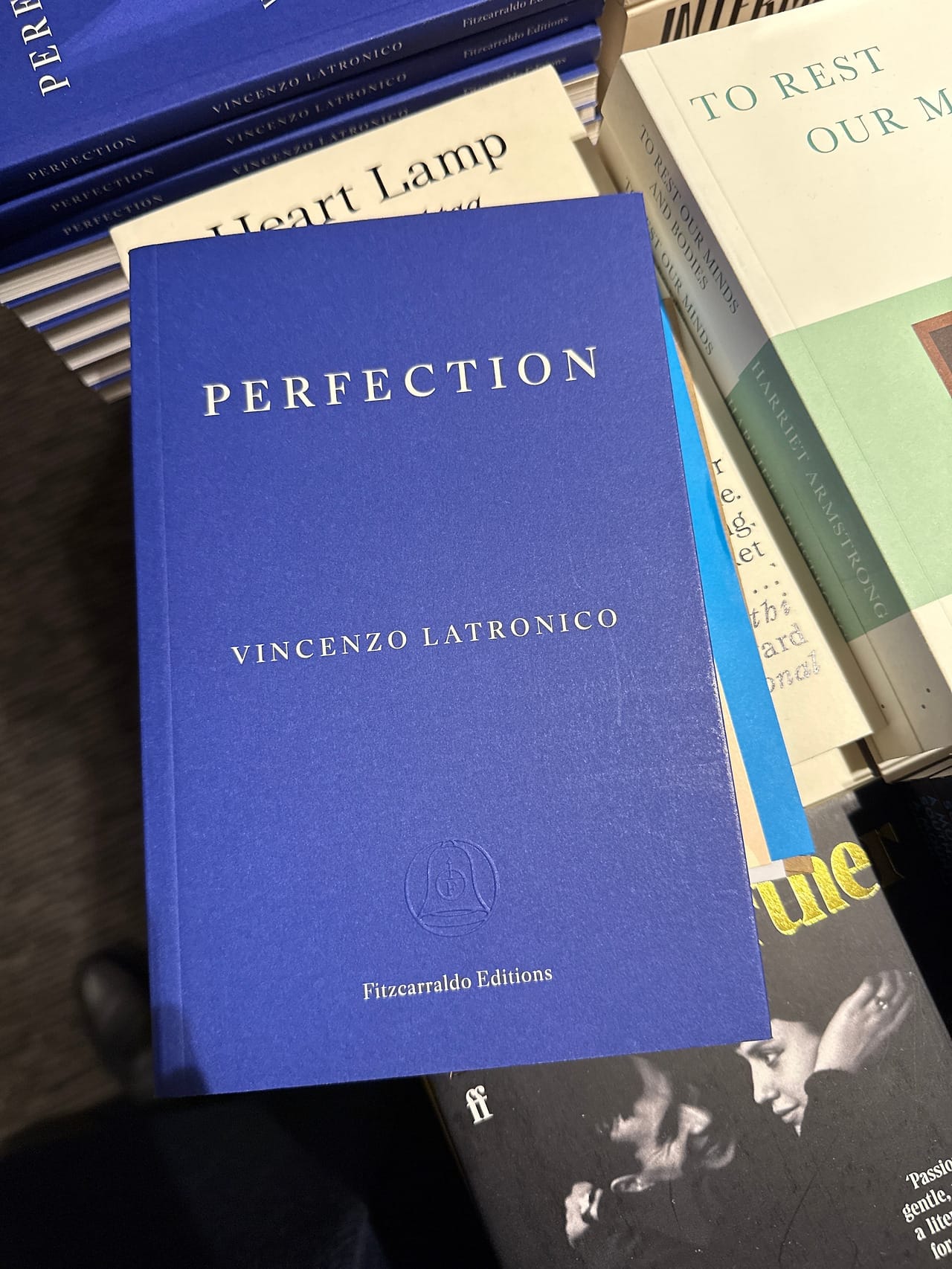
오늘 읽었던 Perfection – Vincenzo Latronico은 딱 그런 호기심을 건드리는 책이었다. 누군가가 망하는 이야기도 아니고, 큰 사건이 터지는 이야기도 아니다. 오히려 잘 살아가는 사람들의 이야기다. 등장인물은 이동이 자유롭고, 일은 유연하며, 취향은 세련되고, 생활은 안정적이다. 우리가 흔히 “이 정도면 됐다”라고 말하는 상태에 이미 도착해 있는 사람들이다. 그런데 이 책은 불편하다. 읽는 동안 자꾸 이런 생각이 따라붙는다.
‘이게 내가 원하던 결말 아닌가?’
선택지가 많다는 건 분명 자유다. 하지만 이상하게도 그 자유는 삶을 깊게 만들기보다는 넓게만 만든다. 어디로 가든 비슷한 카페와 비슷한 전시와 비슷한 대화가 있고, 집의 형태도 삶의 리듬도 크게 달라지지 않는다. 변화는 많은데, 변화가 만들어내는 새로운 감각은 얇다. 삶이 움직이는데도, 마음은 같은 자리에서 제자리걸음을 하는 것처럼 느껴진다.
우리는 결말을 좋아한다. 끝맺음이 주는 안정감. 이제 확정됐다는 느낌. 합격, 이직, 이사, 연애, 결혼, 프로젝트 완료. 그 순간에는 늘 같은 말이 따라온다. “이제 좀 살겠다.” 그래서 우리는 자꾸만 도착하려 한다. 아직인 상태를 견디기보다, 얼른 결말을 손에 쥐고 싶어 한다. 그리고 그 결말이 멋진 모양을 하고 있을수록, 마음은 더 빨리 그곳으로 달려간다.
그런데 이 책이 보여주는 건, 결말에 도착한 뒤의 삶이 아니라 결말만 쌓아 올리는 삶의 이상한 공백이다. 불행해서 무너지는 게 아니다. 오히려 잘 굴러가서 비어 간다. 갈등이 크게 터지지 않고, 감정은 매끈하게 정리되고, 생활은 효율적으로 관리된다. 그러면 불안도 줄어든다. 그런데 동시에, 기쁨도 얇아진다. 기쁨은 대개 어설픔 옆에서 자라는데, 어설픔이 사라진 자리에 기쁨도 오래 머물지 못한다.
이 소설의 방식은 그 메시지와 닮아 있다. 작가는 감정을 길게 설명하지 않는다. 대신 나열한다. 집의 물건들, 생활의 루틴, 대화의 주제, 여행지의 장면. 그것들은 모두 보기 좋다. 그런데 바로 그 “보기 좋음”이 이야기의 핵심처럼 느껴진다. 삶이 ‘느끼는 것’이라기보다 ‘정렬된 것’처럼 보이기 때문이다. 하루는 경험이 아니라 운영으로 채워지고, 운영은 반복이 되고, 반복은 어느 순간 배경음처럼 희미해진다.
관계도 조용히 비슷한 길을 걷는다. 크게 싸우지 않는다. 크게 무너지지도 않는다. 그저 대화가 조금씩 줄고, 함께 있는 시간이 각자의 화면으로 갈라지고, 서로를 이해하지만 더 이상 서로를 향해 깊이 흔들리지 않는다. 이별이 오더라도 비극처럼 오지 않는다. 생활의 흐름이 바뀌는 것처럼, 너무 자연스럽게 지나간다. 그게 더 무섭다. 사랑이 한순간에 무너져서 끝나는 게 아니라, 특별하던 감정이 하루의 루틴 속으로 천천히 스며들어 가벼워지는 모습이 보이기 때문이다.
그래서 “삶은 결말인가 과정인가”라는 질문은, 이 책을 읽고 나면 조금 다른 질문으로 변한다.
삶은 도착으로 증명되는 걸까, 아니면 지나가며 남기는 감각으로 증명되는 걸까.
나는 시간을 살고 있는 걸까, 아니면 시간을 정리하고 있는 걸까.
기억을 떠올리면 더 헷갈린다. 어떤 날은 정말 많은 일을 했는데도 남는 게 없다. 일정표만 꽉 찬 채로 사라진다. 반대로 어떤 날은 별일이 없었는데도, 이상하게 오래 남는다. 버스 창밖으로 스치던 빛, 의미 없는 대화한 줄, 이유 없이 걷고 싶었던 오후. 그날들은 대체로 효율적이지 않다. 설명도 잘 안 된다. 그런데 그런 날들이 시간이 지나면 삶처럼 남는다.
이 책은 그 차이를 정답처럼 말해주지 않는다. 다만 “잘 정리된 삶” 한가운데에서 문득 드는 공백 같은 감각을 남긴다. 그 공백은 나에게는 불편한 존재다. 나는 보통 불편함을 견디지 못하고 곧바로 뭔가로 메우려 한다. 다음 계획, 다음 목표, 다음 이동, 다음 프로젝트. 메울 재료는 언제나 많다. 하지만 무언가 요즘 같은 시기에 느끼는 것은 그 공백을 너무 빨리 덮어버리면 안 될 것 같은 느낌이 남는다. 그 안에 내가 놓친 무언가가 숨어 있는 것 같기 때문이다.
‘잘 살고 있다’는 말은 대체 무엇을 확인해 주는 걸까. 삶을 확인해 주는 걸까, 아니면 삶의 표면을 확인해 주는 걸까. 표면이 반듯하면 나는 안심한다. 그런데 어떤 표면은 너무 반듯해서, 그 안에서 내가 조용히 빠져나가도 모르게 만든다. 결말이 삶인지 과정이 삶인지, 나는 아직 단정할 수 없다. 다만 가끔은 확신한다. 도착이 필요 없는 건 아니지만, 도착이 전부가 되는 순간부터 과정이 이상해진다는 것. 하루가 내일을 위한 준비로만 존재하면, 언젠가 도착하게 될 내일은 정말 ‘삶’일까, 아니면 또 다른 준비일까.
그리고 이 질문이 무서운 이유는, 답이 없어서가 아니다. 답이 있든 없든 상관없이, 우리는 보통 그 질문을 너무 늦게 떠올린다. 이미 한참을 지나온 뒤에야 비로소 “나는 지금 무엇을 살고 있었나”를 묻게 된다.
작년부터 최근까지 내 생각과 마음을 들여다보면 내가 내린 나만의 답은 의외로 단순하다. 목표와 결과에 큰 의미를 붙이기보다, 지금 내게 주어진 시간 안에서 할 수 있는 만큼 해보는 것. 사소한 것에서 기쁨과 행복을 느끼는 것. 그리고 무엇보다, 사랑하는 사람과 함께하는 것. 더 멀리 도착하는 삶이 아니라, 지나가는 과정 속에서 내가 나로 의식적으로 남아 있는 상태이다. 적어도, 표면의 결과적 매끈함만을 목표하는 것이 아니라 과정 속에서 내가 의식적으로 행복을 느끼고, 사랑할 수 있는 상태이다. 어떤 종류의 적절한 불편함이 함께 수반되더라도 말이다.
그래서 내가 생각하는 완벽함(perfection)은 모자람(imperfection)을 지운 결과가 아니다. 부족한 부분이 있어도 삶이 흐트러지지 않는 순간, 그때 비로소 완벽에 가까워진다고 믿는다. 그래서 내가 생각하는 Perfection은 ‘부족함이 없는 삶’이 아니라, 부족함을 안고도 흔들리지 않는 태도라고 생각한다.
Barbican Centre에서 우연히 발견한 책을 읽고 남기는 생각의 메모.
Lately I’ve often found myself thinking, “is life an ending, or a process?” The reason this question keeps coming up is simple. My days aren’t bad at all these days, and yet sometimes I’m not quite sure what I’m living for. I do what needs doing, I keep up with my schedule, and there are no real problems. But on some days, once the day has passed, it feels as though almost nothing of it remains. At those moments I start to doubt whether the word ‘ending,’ or ‘arrival,’ is enough to explain a life.
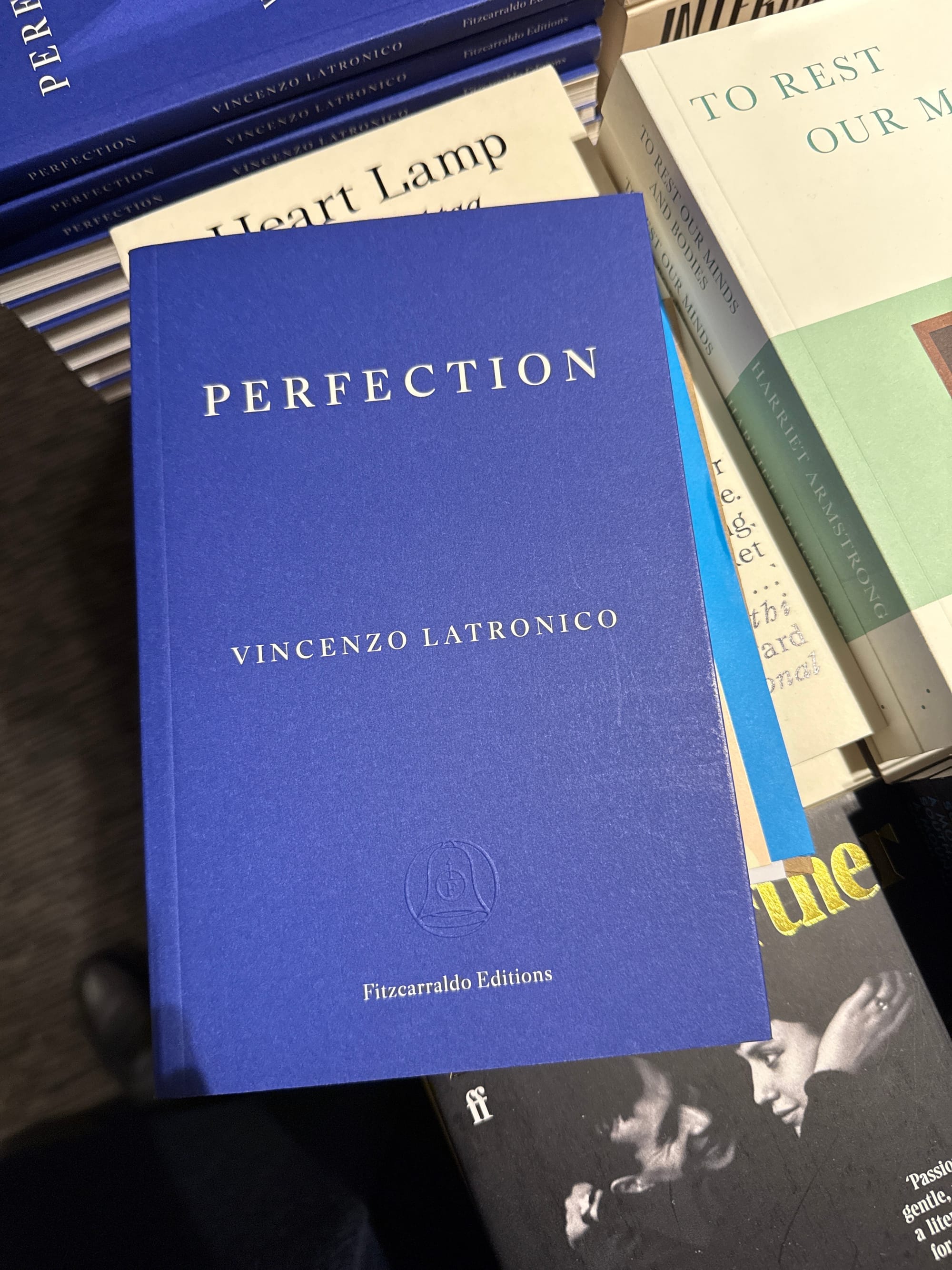
Perfection — Vincenzo Latronico, which I read today, was exactly the kind of book that touches that curiosity. It isn’t a story of someone falling apart, nor a story where some great event erupts. If anything, it’s a story of people living well. The characters move freely, their work is flexible, their taste is refined, their lives are stable. They are people who have already arrived at the state we so often describe as “this is good enough.” And yet the book is unsettling. While reading it, a thought keeps following you around.
‘Isn’t this the ending I wanted?’
Having many options is certainly a kind of freedom. But strangely, that freedom widens life rather than deepening it. Wherever you go there’s a similar café, a similar exhibition, a similar conversation, and neither the shape of home nor the rhythm of life changes much. There is a lot of change, yet the new sensations that change produces are thin. Even as life keeps moving, the heart feels as if it’s marking time in the same spot.
We love endings. The reassurance that a conclusion brings. The feeling that things are now settled. Passing an exam, a new job, a move, a relationship, marriage, finishing a project. In those moments the same line always follows: “now I can finally live.” And so we keep trying to arrive. Rather than endure the state of not-yet, we want to grasp the ending in our hands as quickly as possible. And the more splendid the shape of that ending, the faster the heart runs toward it.
But what this book shows is not life after arriving at an ending; it is the strange emptiness of a life that only piles up endings. It isn’t that things collapse out of unhappiness. On the contrary, they run so smoothly that they empty out. No conflict really erupts, emotions are smoothly tidied away, life is efficiently managed. And so anxiety diminishes too. But at the same time, joy grows thin. Joy usually grows alongside clumsiness, and where clumsiness has vanished, joy can’t linger long either.
The method of this novel resembles its message. The author doesn’t explain emotions at length. Instead, he lists. The objects in the home, the routines of life, the topics of conversation, the scenes of travel destinations. They all look good. And it is precisely that “looking good” that feels like the heart of the story. Because life appears to be something ‘arranged’ rather than something ‘felt.’ The day is filled with operation rather than experience, operation becomes repetition, and at some point repetition fades into something like background noise.
Relationships quietly walk a similar path. There are no big fights. Nothing collapses dramatically. Conversation simply dwindles little by little, time spent together splits off into each person’s own screen, and they understand each other yet are no longer deeply shaken toward each other. Even when a parting comes, it doesn’t come like a tragedy. It passes by all too naturally, like a shift in the flow of daily life. That is what’s more frightening. Because what you see is not love collapsing and ending in a single moment, but a once-special feeling slowly seeping into the routines of the day and growing light.
And so the question “is life an ending or a process?” turns, once you’ve read this book, into a slightly different question.
Is life proven by arrival, or by the sensations it leaves behind as it passes?
Am I living time, or am I tidying time up?
Recalling memories only makes it more confusing. On some days I did so many things and yet nothing remains. The day vanishes with only the schedule left full. Conversely, on some days nothing in particular happened, and yet strangely they linger for a long time. The light grazing past the bus window, a single meaningless line of conversation, an afternoon when I wanted to walk for no reason. Those days are mostly not efficient. They’re hard to explain, too. And yet, as time passes, days like that are what remain like life.
This book doesn’t hand you that difference like an answer. It only leaves a sensation, like an emptiness that suddenly arises in the middle of a “well-arranged life.” That emptiness is an uncomfortable thing for me. I usually can’t bear discomfort and immediately try to fill it with something. The next plan, the next goal, the next move, the next project. There’s always plenty of material to fill it with. But what I feel in a season like this is the lingering sense that I shouldn’t cover that emptiness over too quickly. Because it seems that something I’ve overlooked is hiding inside it.
What is it, exactly, that the words ‘I’m living well’ confirm? Do they confirm life, or do they confirm the surface of life? When the surface is neat, I feel reassured. But some surfaces are so neat that they let me quietly slip out from within them without anyone noticing. Whether the ending is life or the process is life, I still can’t say for certain. But sometimes I’m sure of this: it’s not that arrival is unnecessary, but that from the moment arrival becomes everything, the process turns strange. If a day exists only as preparation for tomorrow, then will the tomorrow I eventually arrive at really be ‘life,’ or just another preparation?
And the reason this question is frightening is not that there’s no answer. Whether there’s an answer or not, we usually call the question to mind too late. Only after we’ve already passed far beyond do we finally come to ask, “what have I been living all this time?”
When I look into my thoughts and my heart from last year up to recently, the answer I’ve arrived at for myself is unexpectedly simple. Rather than attaching great meaning to goals and results, doing as much as I can within the time given to me right now. Feeling joy and happiness in small things. And above all, being together with the people I love. Not a life of arriving ever farther, but a state of consciously remaining myself within the process as it passes. At the very least, not a state that aims only at the resulting neatness of the surface, but one in which I can consciously feel happiness and love within the process — even if some appropriate kind of discomfort comes along with it.
And so the perfection I have in mind is not the result of erasing imperfection. The moment when life doesn’t fall apart even though there are lacking parts — that, I believe, is when it comes closest to perfection. So the Perfection I have in mind is not ‘a life with no shortcomings,’ but an attitude that holds its shortcomings and yet is not shaken.
A memo of thoughts left after reading a book stumbled upon by chance at the Barbican Centre.
댓글을 남기려면 이메일로 가입/로그인해주세요. Sign in with your email to leave a comment.