3월부터 짧고 단기간의 해외 체류 일정이 잦아지고 있다. 다양한 국가를 오가며 강도 높은 일정을 소화하려면, 제법 많은 체력을 요구받는다. 그래서 나만의 방식 하나를 정해두고 실천 중이다. 시차가 다르더라도 한 곳의 시간대를 기준으로 생활 리듬을 고정하는 것이다.
예를 들어, 이번에 미국에서 열린 버크셔 해서웨이 주주총회에 아주 짧게 참석했을 때도 나는 내내 한국 시간으로 생활했다. 금요일과 일요일은 총회가 현지 기준으로 오전에 열려서, 나는 미국의 점심시간, 그러니까 한국 시간으로는 자정 무렵에 잠을 청했다. 이후 저녁까지 깊이 잠들었고, 새벽에는 아예 자지 않았다. 다만 토요일에는 총회가 새벽부터 오후까지 이어져서, 그날 하루는 어쩔 수 없이 밤을 새웠다.
이처럼 미국 시차에 아예 적응하지 않다 보니, 다시 아시아권으로 돌아왔을 때 피로감이 훨씬 덜했다. 여기에 한 가지 더 팁이 있다면, 식사 리듬을 고정하는 것이다. 내 몸의 생체 시계는 점심 11시 30분, 저녁 6시에 맞춰져 있다. 그래서 비행 중 어떤 시간이든 이 리듬에 맞지 않으면 식사를 하지 않는다. 또한, 혈당 스파이크를 피하려고 음식도 신중히 고른다. 그렇게 하면 이동이 많고 생활이 불규칙한 와중에도 피로도를 최소화할 수 있다. 중요한 건, 불규칙 속에서 내 몸만의 규칙을 지키는 것이다.
이번 주는 미국에서 돌아오자마자 베트남으로 출국하기 전, 잠시 부산에 들렀다. 중요한 약속이 있었기 때문이다. 사실 부산에 가기 전까지 꽤 고민이 많았다. 이미 체력도, 몸 상태도 거의 바닥에 가까웠고, 일정도 빠듯했다. 시간은 쪼개 써야 했고, 정신도 육체도 여유가 없었다. 그럼에도 불구하고 부산행을 결심한 건, 꼭 뵙고 싶은 대표님께서 금요일 저녁 시간을 내주셨기 때문이다. 대표님들은 나보다 훨씬 더 바쁘신 분들이다. 그렇기에 시간이 허락될 때는, 내가 힘들더라도 꼭 시간을 맞추려 한다. 단순히 업무적 이해관계 때문이 아니다. 인간적으로 존경하는 분이기에 더욱 그렇다.
나는 어른들과 대화하는 게 어렵지 않다. 오히려 즐겁다. 그래서인지 주변에서는 종종 나를 애늙은이라고 부르곤 한다. 아마도 생활방식이나 생각하는 태도가 20대답지 않기 때문일 것이다. 나는 술도 시끄러운 자리도 좋아하지 않는다. 사색을 좋아하고 조용한 성격이라, 종종 40대 중반의 조용한 아저씨 같다는 말도 듣는다.
그날의 식사는 기대 이상이었다. 예전에는 업무로 알게 된 사이였지만, 지금은 편안한 친구처럼 느껴지는 자리였다. 그리고 무엇보다 나는 ‘회사를 사랑하는 대표님’을 존경한다. 단지 소박하거나 꾸밈없는 사람만이 아니라, 진정성 있게 회사를 하나의 문화로 여기고 긴 호흡으로 기업을 성장시키려는 분 또한 그 철학을 보고 배울 수 있어서 나는 그 시간이 즐겁다.
우리나라 대부분의 비상장사에서 소유와 경영이 분리되지 않은 현실 속에서, 기업보다 개인을 우선시하는 문화는 어쩔 수 없이 존재한다. 그들을 탓할 수는 없지만, 나는 기업을 자신의 사유물이 아니라 하나의 공동체로 바라보는 태도에 깊이 감동한다. 게다가 이 회사는 과거 내가 전공으로 선택한 산업이면서 몸담았던 산업에 속해 있다. 여전히 애정을 갖고 지켜보는 분야이기에, 산업의 사이클이 좋든 나쁘든 항상 관심이 간다. 이 분야에서 일하는 사람들이 잘되었으면 하는 기대와 그리고 우리나라에도 좋은 일이 있기를, 진심으로 바라고 있다.
대표님과의 대화에서 기억에 남는 몇 가지
대표님은 회사를 단기적 수익이 아닌, 100년 이상 지속되는 기업으로 만들고 싶다고 하셨다. 이전에도 나와의 만남에서 회사를 매각하거나 처분하는 선택지보다는, 어떻게 더 성장시키고 유지해 나갈 수 있을지를 고민하셨던 기억이 있다.
대표님은 창업주이신 아버지로부터 회사를 물려받은 2세 경영자다. 흥미롭게도 나는 대표님보다 창업주를 먼저 알게 되었었다. 같은 학교 출신이셨던 창업주님을 동문회에서 우연히 먼저 뵌 적이 있었기 때문이다. 철학이 분명하고 자신만의 세계관이 뚜렷했던 분으로 기억한다.
대표님을 뵈었을 때, 나는 자연스레 창업주와 비슷한 느낌을 받았다. 아버지는 매우 엄격하셨던 분이었던 것 같은데, 자녀인 대표님 역시 바른 성품과 책임감을 지닌 분이었고, 아버지의 경영 철학을 고스란히 계승하고 있었다. 대표님의 사업에 대한 태도는 단기간의 결과를 바라보기보다 장기간의 흐름을 읽고 계신 듯했다. 장기적인 관점에서 사업의 지속성과 기업문화의 내재화, 그리고 업의 본질에 대해 끊임없이 사유하고 있었다.
나는 이러한 점이 사람도 같다고 생각한다. 인생을 일주일 단위로 계획하는 사람과, 1년, 5년, 10년 후를 내다보며 사는 사람은 전혀 다르다. 당장의 행동이나 계획은 달라질 수 있겠지만, 일관된 방향성을 지닌 사람은 언제나 그 기반에서 흔들림 없이 나아간다. 그래서 나는 삶에도, 경영에도 ‘장기적인 흐름’이라는 것이 매우 중요하다고 믿는다.
자녀에게 물려주어야 할 마인드
기업 오너분들을 만나다 보면, 자연스레 ‘승계’라는 주제가 자주 등장한다. 특히 한국전쟁 이후 고속 성장기를 이끌었던 1세대 기업들이 2010년을 기점으로 은퇴와 승계의 시기를 맞이하고 있다. 대표님과의 대화에서도 자녀 이야기가 나왔다.
나는 부모님이 자주 하시는 말씀 중 하나를 꺼냈다. “모든 부모는 자식이 잘 되기를 바라지만, 실제로 마음처럼 되지 않는 경우가 많다”는 이야기다. 그래서 부모님은 모임 자리에 가서도 자녀, 우리에 대한 이야기를 잘하지 않는다고 한다. 누군가에게는 그것이 상처나 불쾌감으로 다가올 수 있기 때문이다. 재미있는 것은 부모의 기대와 다르게 자라는 것이 실패는 아니다. 단지, 부모의 기준에 부합하지 않아 생기는 그들의 아쉬움일 뿐이라고 생각한다.
대표님은 내 삶의 태도나 성격에 대해서도 물어보셨다. 나는 웃으며 대답했다. 저는 원래 아무것도 가진 게 없는 사람이라 열심히 살아야만 했고, 돈은 원래 없었기에 애초에 돈에 흥미가 없다고 했다. 그래서 나는 내 개인적인 흥미와 재미를 위해서 열심히 좇아 살고 있다고 했다. 실제로도 그렇다. 돈을 최우선으로 삼기보다는, 나에게 의미 있는 일에 몰입하고 싶었다. 그 일을 지속적으로 흥미롭게 이어가기 위해 공부하고, 선택하고, 또 도전해 왔다.
자녀를 어떻게 키우는 것이 좋을까 하는 화제도 자연스럽게 이어졌다. 나는 자녀가 없기에 직접적인 경험은 없지만, 워렌 버핏의 철학에 공감한다고 말했다. 그리고 버핏의 유명한 말을 전했다. 워렌 버핏의 이 문장은 내 마음에 깊이 남아 있다. 물론 그의 부의 규모와 나를 비교할 수는 없지만, 이 철학은 단지 ‘돈’에만 국한되지 않는다고 생각한다.
무엇이든 할 수 있을 만큼은 주되, 아무것도 하지 않아도 될 만큼은 주지 않는다.
“I want to give my kids enough so that they can do anything, but not so much that they can do nothing.”
나는 이 정신을 자녀에게 보여줄 ‘세상’, 가정 안에서의 ‘교육’, 그리고 인생의 ‘가능성’을 열어주는 데에도 적용할 수 있다고 믿는다. 아이들이 스스로 독립적이고 의미 있는 삶을 살아가되, 부모에게 전적으로 의존하지는 않도록 하는 것.
대표님도 이 문장을 아주 좋아하시는 듯했다. 대화 중 이 말을 들으시고는 바로 휴대폰을 꺼내 무언가를 적기 시작하셨다. 알고 보니, 대화 중 인상 깊은 말이나 기억하고 싶은 문장은 그 자리에서 바로 메모해 두는 습관이 있으셨다. 나는 그 모습이 참 인상 깊었다. 세심함과 배움의 태도가 묻어나는, 멋진 습관이었다.
가업을 시작하게 된 이유
(인생은 정말 알 수 없다.)
대표님은 원래 가업을 잇게 될 사람이 아니었다고 한다. 부모님의 기대를 충족하며 자라긴 했지만, 정작 본인은 전혀 다른 인생을 살아왔다고 했다. 기업에 입사해 한국을 떠나 중국에서 20년 넘게 생활했고, 그곳에서 가족들과 살아가는 삶을 오랫동안 구상해 왔다고 했다. 가업은 자연스럽게 동생이 이어가기로 되어 있었다고 한다.
동생은 대표님과 3~4살 터울이었다고 한다. 그래서 어릴 적부터 자연스럽게 동생이 부모님의 사업을 이어받을 거라고 생각해 왔다고 했다. 그런데 어느 날 갑자기 동생이 아프기 시작했다고 한다. 건강하던 동생이 갑작스럽게 암 진단을 받았고, 진단을 받은 지 1년도 안 돼 세상을 떠났다고 했다.
부모님께는 정말 큰 충격이었다고 한다. 가족 전체가 크게 흔들렸고, 그때부터 아버지께서 대표님에게 “너라도 돌아와야 하지 않겠느냐”는 말씀을 수년간 계속하셨다고 한다. 결국 대표님은 자신의 가족을 중국에 남겨둔 채, 혼자 한국으로 돌아와 가업을 물려받을 준비를 시작하게 됐다고 한다.
보통 이렇게 갑작스럽게 승계를 시작하게 되면 내부 조직과의 조율이나 문화적인 충돌이 많아 시간이 오래 걸린다고들 한다. 그런데 대표님은 의외로 회사가 편했다고 한다. 아버지가 이미 철학과 기반을 잘 만들어 놓으셨고, 자신은 그 안에서 실행만 하면 됐기 때문에 일하는 데 있어 큰 어려움은 없었다고 했다.
오히려 20년 넘게 일했던 대기업에서는 늘 ‘철학이 맞지 않는다’는 불편함을 느꼈다고 했다. 실행은 쉬웠지만, 방향이 달라서 마음이 편치 않았다고 한다. 가업에 들어왔을 때 기업이 너무 편하게 느꼈다고 한다. 단순히 아버지의 기업이라서 아니라, 기업의 철학이나 임직원들이 너무 편하게 다가왔다고 한다. 나는 그 이야기를 들으며, 기업의 철학과 한 개인이 가진 철학이 얼마나 중요한지 다시 생각하게 됐다. 단순히 돈을 버는 목적을 넘어서, 기업이 가진 문화와 철학이 나의 방향성과 맞지 않으면 결국 오래 함께할 수 없다는 걸 공감했다.
그리고 사업적으로도 다행히도 회사가 하고 있는 사업이 당시의 글로벌 흐름과 맞물려 있었다고 한다. 중국 제조업이 부상하면서, 생산자이자 소비자인 중국 시장이 기업에게 매우 중요한 포지션이 되었고, 20년 넘게 중국에서 경험을 쌓아온 대표님의 역량이 자연스럽게 녹아들 수 있었다고 한다.
그 이야기를 들으면서 나는 다시 한번 생각했다.
정말 인생은 알 수 없다.
예전 회사에서 가장 존경했던 분이 해주신 말이 떠올랐다.
“실력을 유지하며 오래 남는 유일한 길은 ‘정도(正道)’를 걷는 거야.”
빠르게 가는 길도 있고, 단기간에 성과를 내는 방법도 있을 수 있다. 하지만 결국 세상에 남는 건, 바르게 가는 사람과 기업이다.
신기하게도 아버지인 창업주 회장님도 기업의 슬로건을 “바르게, 제대로”로 정했다고 한다. 대표님은 이 말과 삶의 방식이 너무나 자신과 맞다고 생각하신다. 그래서일까. 나는 대표님을 보면 자연스럽게 ‘교과서 같다’는 생각이 든다. 말투, 행동, 경영 방식까지 흐트러짐 없이 바른 분이다.
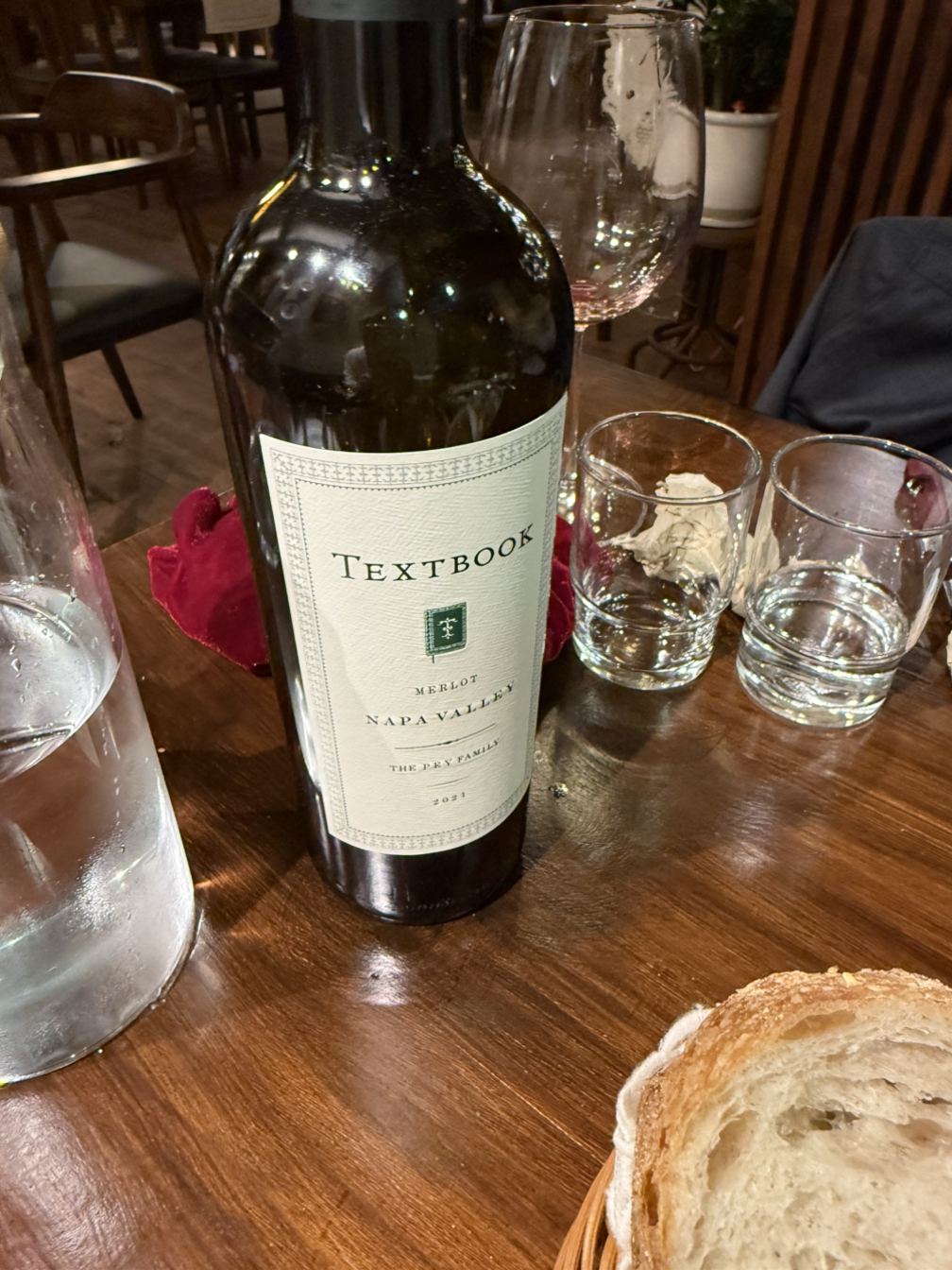
그날 술자리에서 대표님은 와인 한 병을 꺼내셨다. 이름은 ‘TEXTBOOK’. 나는 술을 잘 알지는 못하지만, 맛있었다고 느꼈다. 대표님은 이 와인을 좋아하는 이유에 대해 이렇게 말씀하셨다.
이 와인이 좋은 이유는 맛이 좋고. 그리고 자신과 닮았다고 한다. 대표님은 학교 생활을 하면서 교과서 같다는 이야기를 자주 듣고 지냈다고 한다. 그 말을 듣고, 나는 바로 와인의 이름을 기억하게 됐다.
조금 장황하지만 편안한 저녁의 이야기를 적은, 오늘
이 글의 제목은 교과서(Textbook)이다.
Since March, short, brief stints abroad have become frequent. Moving between various countries and keeping up with a demanding schedule takes a fair amount of stamina. So I have settled on a method of my own and stick to it: even across time zones, I fix my daily rhythm to a single time zone.
For instance, when I attended the Berkshire Hathaway shareholders’ meeting in the United States this time, very briefly, I lived the whole while on Korean time. On Friday and Sunday the meeting opened in the morning local time, so I went to sleep around midday in the US, which is to say around midnight Korean time. After that I slept deeply until the evening, and stayed up the whole night. On Saturday, though, the meeting ran from dawn until the afternoon, so that day I had no choice but to stay awake through it.
Because I never adapted to the US time difference at all, the fatigue was far milder when I returned to Asia. If there is one more tip, it is to fix your meal rhythm. My body clock is set to lunch at 11:30 and dinner at 6:00. So no matter the hour during a flight, if it does not match this rhythm, I do not eat. I also choose food carefully to avoid blood sugar spikes. Doing this lets me keep fatigue to a minimum even amid all the travel and irregular living. What matters is keeping my body’s own rules within the irregularity.
This week, right after returning from the US and before departing for Vietnam, I stopped briefly in Busan. There was an important appointment. In truth, I agonized quite a bit before going. My stamina and physical condition were already close to rock bottom, and the schedule was tight. I had to ration my time, and neither mind nor body had any room to spare. Even so, what made me decide to go to Busan was that a chairman I very much wanted to see had set aside his Friday evening. These chairmen are far busier than I am. So when time allows, I try hard to make myself available, even if it is hard on me. Not simply because of business interests. It is all the more so because he is someone I respect as a person.
I do not find it difficult to talk with my elders. If anything, I enjoy it. Perhaps that is why people around me sometimes call me an old soul. It is probably because my way of living and my way of thinking do not seem like that of someone in his twenties. I do not like drinking, nor noisy gatherings. Because I enjoy contemplation and have a quiet temperament, I am sometimes told I am like a quiet middle-aged man in his mid-forties.
That evening’s meal was better than I had expected. We had once known each other through work, but now it felt like sitting with an easy friend. And above all, I respect a ‘chairman who loves his company.’ Not merely someone modest or unpretentious, but someone who genuinely regards the company as a culture and seeks to grow the business with a long horizon. Because I can observe and learn from that philosophy, I enjoy that time.
In the reality of most unlisted Korean companies, where ownership and management are not separated, a culture that puts the individual before the company inevitably exists. I cannot blame them, but I am deeply moved by an attitude that sees the company not as one’s private possession but as a community. What is more, this company belongs to the industry I once chose as my field of study and worked in. Because it is a field I still watch with affection, I take an interest in it whether the industry’s cycle is good or bad. I sincerely hope that the people working in this field do well, and that good things come for our country too.
A few things from the conversation with the chairman that stayed with me
The chairman said he wanted to build the company not for short-term profit, but into a business that endures for more than a hundred years. Even in our earlier meetings, I recall that rather than the option of selling or disposing of the company, he agonized over how he might grow and sustain it further.
The chairman is a second-generation manager who inherited the company from his father, the founder. Interestingly, I came to know the founder before the chairman. I had once happened to meet the founder, an alumnus of the same school, at an alumni gathering. I remember him as someone with a clear philosophy and a distinct worldview of his own.
When I met the chairman, I naturally got an impression similar to the founder’s. The father seems to have been a very strict man, and his son, the chairman, was likewise a person of upright character and a sense of responsibility, faithfully carrying on his father’s management philosophy. The chairman’s attitude toward business seemed to read the long-term flow rather than fixate on short-term results. From a long-term perspective, he was endlessly contemplating the continuity of the business, the internalization of corporate culture, and the essence of the trade.
I think this is the same with people. Someone who plans life in weekly units and someone who lives looking one, five, ten years ahead are entirely different. Their immediate actions or plans may differ, but a person with a consistent direction always moves forward unshaken from that foundation. That is why I believe ‘the long-term flow’ matters greatly in both life and management.
The mindset to pass on to one’s children
When you meet company owners, the topic of ‘succession’ naturally comes up often. In particular, the first-generation firms that led the rapid-growth era after the Korean War have been reaching the season of retirement and succession around 2010. The subject of children came up in my conversation with the chairman, too.
I brought up one of the things my parents often say: that every parent wishes for their children to do well, but in reality it often does not turn out as they hoped. For that reason, my parents say, they do not talk much about their children, about us, when they go to gatherings. To someone else it can come across as a wound or as something unpleasant. The interesting thing is that growing up differently from a parent’s expectations is not a failure. It is simply, I think, the parent’s own disappointment that arises from not meeting their standards.
The chairman also asked about my attitude toward life and my personality. I answered with a smile. I said that I am someone who originally had nothing, so I had to live hard, and since I never had money to begin with, I had no interest in money from the start. So I told him that I live chasing hard after my own personal interests and joys. And it really is so. Rather than putting money first, I wanted to immerse myself in work that is meaningful to me. To keep doing that work in an interesting way, I have studied, chosen, and taken on challenges.
The topic of how best to raise children also followed naturally. Since I have no children, I have no direct experience, but I said that I resonate with Warren Buffett’s philosophy. And I shared Buffett’s famous line. This sentence of Warren Buffett’s has stayed deep in my heart. Of course I cannot compare the scale of his wealth to mine, but I think this philosophy is not limited to ‘money’ alone.
“I want to give my kids enough so that they can do anything, but not so much that they can do nothing.”
I believe this spirit can also be applied to the ‘world’ you show your children, the ‘education’ within the home, and the ‘possibilities’ of life that you open up for them. To have children live independent, meaningful lives of their own, while not depending entirely on their parents.
The chairman seemed to like this sentence very much, too. On hearing it during our conversation, he immediately took out his phone and began writing something down. It turned out he had a habit of jotting down, on the spot, any striking remark or sentence he wanted to remember from a conversation. I found that quite impressive. It was a wonderful habit, one that revealed an attentiveness and a willingness to learn.
How he came to take over the family business
(Life is truly unpredictable.)
The chairman said he was originally not the one meant to carry on the family business. Though he grew up meeting his parents’ expectations, he himself had actually lived an entirely different life. He had joined a company, left Korea, and lived in China for more than twenty years, and for a long time he had envisioned a life there with his family. The family business was naturally meant to be carried on by his younger brother.
His younger brother was three or four years apart from him. So from childhood he had naturally assumed his brother would take over their parents’ business. But then one day his brother suddenly began to fall ill. His once-healthy brother was abruptly diagnosed with cancer, and within less than a year of the diagnosis he passed away.
It was a tremendous shock to his parents. The whole family was deeply shaken, and from then on his father kept telling the chairman, for years, ‘Shouldn’t you at least come back?’ In the end the chairman left his own family behind in China and returned to Korea alone to begin preparing to inherit the business.
Usually, when succession begins this suddenly, it is said to take a long time because of all the friction in aligning with the internal organization and cultural clashes. Yet the chairman, surprisingly, found the company comfortable. His father had already built the philosophy and foundation well, and since he only had to carry out the work within that, he had no great difficulty in the job.
If anything, at the large corporation where he had worked for more than twenty years, he had always felt the discomfort that ‘the philosophy did not fit.’ Execution was easy, but because the direction was different, his heart was not at ease. When he entered the family business, he said, the company felt so comfortable. Not simply because it was his father’s company, but because the company’s philosophy and its people came across as so comfortable. As I listened, I came to think again about how important the philosophy of a company and the philosophy held by an individual are. Beyond the mere aim of making money, I understood that if a company’s culture and philosophy do not match your own direction, you ultimately cannot stay together for long.
And in business terms, too, the company was fortunate in that the business it was engaged in dovetailed with the global trend of the time. As Chinese manufacturing rose, the Chinese market, both producer and consumer, became a very important position for the company, and the chairman’s competence, built over more than twenty years in China, could naturally be folded into it.
As I listened to that story, I thought once more.
Life truly is unpredictable.
I was reminded of something said to me by the person I respected most at my former company.
“The only way to last a long time while keeping your skills is to walk the ‘right path’ (jeongdo).”
There are faster routes, and there may be ways to produce results in a short time. But in the end, what remains in the world are the people and companies that go the right way.
Remarkably, the founder and chairman, his father, had also set the company’s slogan as ‘Rightly, Properly.’ The chairman believes this saying and way of living suit him perfectly. Perhaps that is why, when I look at the chairman, the thought ‘he is like a textbook’ comes to me naturally. From his way of speaking to his actions to his way of managing, he is an upright person without a hint of disarray.
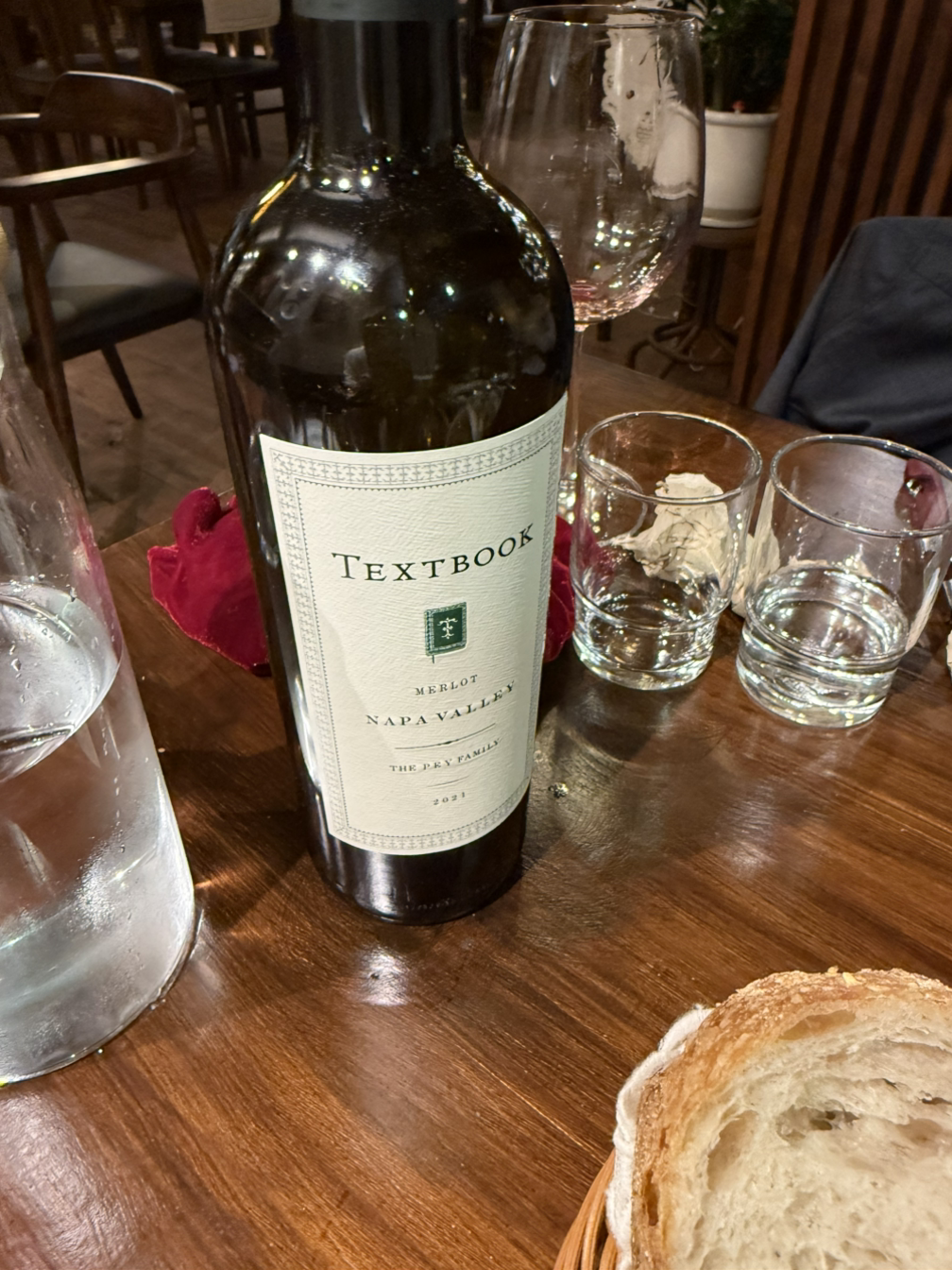
That evening over drinks, the chairman brought out a bottle of wine. Its name was ‘TEXTBOOK.’ I do not know much about wine, but I felt it was delicious. The chairman explained why he likes this wine like this.
The reason this wine is good is that it tastes good. And, he said, it resembles him. The chairman said that throughout his school days he was often told he was like a textbook. Hearing that, I immediately committed the wine’s name to memory.
A little long-winded, but today I have written the story of an easy evening.
The title of this piece is Textbook.
댓글을 남기려면 이메일로 가입/로그인해주세요. Sign in with your email to leave a comment.